

Published 2026-10-24 · By Aditi Sen (Senior Data & Chart Analyst · Kolkata Desk)
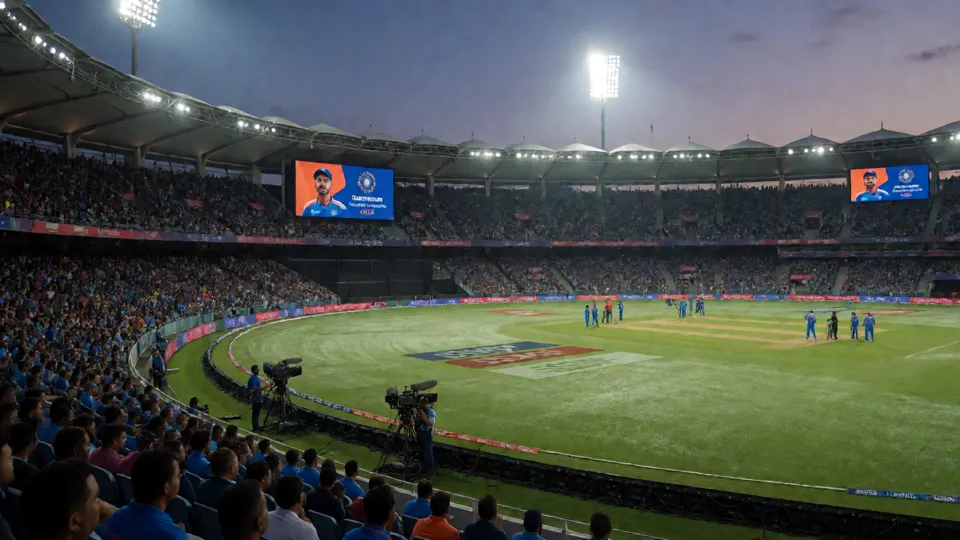
India asked New Zealand to bat in the first T20I, and the team sheet carries as much signal as the toss. India bring in Reddy and Mayank, a twin move that adds seam-bowling depth and raw pace to a field-first plan. New Zealand have marked Daryl Mitchell to bat at No. 3 and slotted Bevon Jacobs into the middle order, a clear attempt to separate anchor from accelerator. For a Kolkata desk watching both the scoreboard and the digital-gaming ticker, the relevant question is not who “won” the toss but which benchmark each selection is designed to move.
The toss decision is a dew hedge. At Indian venues in late October, evening dew probability commonly sits between 60% and 75%, and chasing sides have historically gained roughly 6 to 10 percentage points in win probability when the ball starts skidding after 18:00. India asking New Zealand to bat is therefore a data call: reduce the unknown of a second-innings grip, trust the new-ball pair, and let Mayank’s pace attack the stumps before the surface becomes a slip hazard for spinners.
Mitchell at No. 3 is New Zealand’s spin-insurance policy. His T20I strike rate has generally lived in the 130s, but the more useful number is his dot-ball avoidance through the middle overs. If Mitchell faces 25-plus balls at a strike rate below 125, New Zealand’s projected total usually compresses toward 165-175. If he clears 140, the same innings stretches toward 185-plus. Jacobs in the middle order is the counterweight: a higher boundary ceiling in overs 13-17, when India’s death-overs economy will be tested.
For readers tracking live dealer teen patti india, the parallel is execution latency. A live table and a T20I middle over are both judged by repeatable numbers: join time, stream delay, uptime, RNG audit cadence, and the discipline to publish them. Platforms that expose those benchmarks — as referenced by dream77-download.com — give the same clarity that a wagon wheel gives a cricket analyst. Without that transparency, users confuse speed with reliability and variance with skill.
Benchmark board: T20I control vs platform control
| Benchmark | T20I reference | Live dealer teen patti india reference | Analyst read |
|---|---|---|---|
| Powerplay scoring | 8.4-8.9 RPO for top sides | Lobby join under 3 seconds | Early tempo sets the expected range |
| Middle-over spin economy | 7.2-7.8 RPO | Live stream latency under 120 ms | Compression without errors |
| Death-over economy | 9.5-10.5 RPO | Uptime at or above 99.9% | High-pressure execution |
| Dew-adjusted chase win% | +6 to +10 percentage points | Published RNG audit cadence | Transparency reduces perceived variance |
The table is not decorative. T20I teams now plan in these bands, and live dealer teen patti india platforms are increasingly judged in the same language. A 120 ms stream delay is the digital equivalent of a fielder’s half-step: small in isolation, decisive at scale. An 8.0 powerplay economy is the bowling equivalent of a sub-three-second lobby join: it keeps the user or captain inside the intended control window.
India’s immediate matchups are measurable. If Reddy bowls two overs inside the powerplay for 16 or fewer, India’s field-first call gains structure. If Mayank takes a wicket in his first spell while conceding under 8.0 runs per over, New Zealand’s No. 3 plan is exposed before Mitchell can settle. For New Zealand, Jacobs must convert the 13-17 over window at a strike rate above 150; anything below 135 lets India’s spinners dictate matchups and drag the total back toward par.
The broader read for Indian sports and gaming audiences is benchmark literacy. India’s toss call, Mitchell’s No. 3 slot, and Jacobs’ middle-order promotion are all attempts to control variance before the first ball is bowled. The same discipline applies to live dealer teen patti india: published latency, uptime, and audit data matter more than flashy claims. On this evidence, India’s field-first plan is rational if dew arrives on schedule and Mayank’s pace lands. If not, New Zealand’s anchor-accelerator split has enough structure to flip the projected total.
Related coverage
- Live Dealer Teen Patti India and RCB vs GT IPL 2026 Final Guide
- Live Dealer Teen Patti India: Gill’s Ranji Move & T20 Toss Edge
Updated 2026-10-24 · Instant Rupee Deposits & 60s Withdrawals · 24/7 Support.
Access Official BarbaryLive Portal →